

Music Licensing: From the Hot Dog Stand to the Radio Station

A hot dog stand, a roller rink, a Christmas parade, a coffee shop, a wedding venue, a school gym, and a radio station may not look like they belong in the same conversation, but they can all run into the same problem once music becomes part of the experience. One may be selling lunch, another may be hosting a reception, and another may be sending songs through the air, but the question underneath all of them is the same: can this music legally be used here?
Most small business owners do not wake up thinking about copyright law. They wake up thinking about payroll, inventory, customers, staffing, weather, broken equipment, late invoices, and why Facebook changed the button again. Music feels small compared to all of that. It feels like atmosphere, something you turn on so the room does not feel dead. But when music shapes the customer experience, supports a brand, keeps people in a room, creates energy at an event, or gives a video emotional weight, it is no longer just sound floating in the air. It has become part of the business.
That is where music licensing gets weird.
The Hot Dog Stand Problem

Let’s start with the simplest possible example. A guy opens a hot dog stand downtown and puts a boombox behind the counter. It plays classic rock, Motown, country, or maybe some 80s alternative because he has taste and unresolved MTV issues. Customers walk up, the stand feels alive, and the music helps the place feel like more than a folding table with mustard packets.
The owner may think, “I’m not charging people to hear music. I’m selling hot dogs.” That may be true, but the music is still being used in a customer-facing business setting. The better question is not whether the owner paid for Spotify, bought the CD, downloaded the track, or owns the song on an old iPod hiding in a drawer. The better question is whether the business has the right kind of permission for that kind of use.
That is where many small businesses step on the rake in the grass. A personal music subscription may cover private listening in your truck, kitchen, garage, or headphones, but it does not automatically cover public use in a commercial space. Once music becomes part of the customer experience, the rights question changes.
Music Is a Business Asset
This is where the marketing brain needs to wake up. Businesses often treat music like decoration, the same way they sometimes treat logos, Facebook posts, videos, flyers, or websites. They ask what sounds cool, what feels fun, or what can be thrown together quickly. Those are not useless questions, but they are not the first questions.
The better marketing question is: what job is this doing? If music is playing in your dining room, it is helping create atmosphere. If music is under your commercial, it is shaping the emotion of the message. If music opens your podcast, it is becoming part of the identity of the show. If music plays before a livestream, from a parade float, inside a skating rink, or during a school fundraiser, it is helping frame the experience for the people in the room.
That means music should be treated like a business asset, not Duckie’s mixtape.
Public Use Is Bigger Than Restaurants
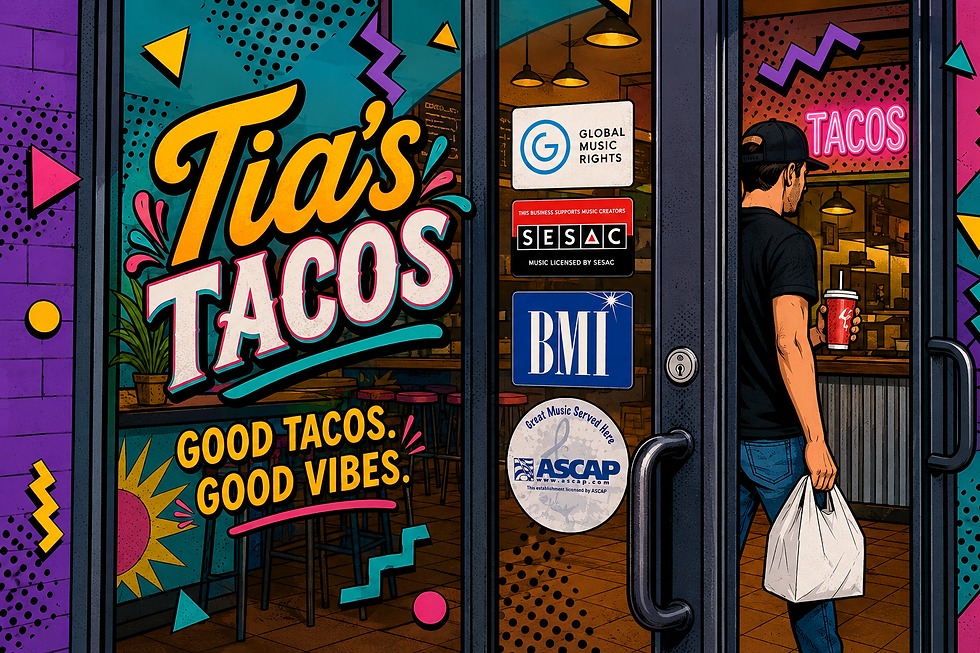
Restaurants are an easy example, but they
are not the only place music rights can matter. Christmas parades, sporting events, roller rinks, bars, gyms, festivals, retail stores, waiting rooms, coffee shops, chamber of commerce events, city property, school events, nonprofit fundraisers, jukeboxes, and karaoke nights can all create licensing questions when copyrighted music is used publicly.
The details matter because a bar with a live band is not the same as a skating rink playing recorded music, and a Christmas parade float blasting Mariah Carey is not the same as a radio station programming songs over the air. A school gym, city festival, fundraiser, restaurant patio, or baseball field may each have a different responsibility depending on who organized the event, where the music was heard, whether admission was charged, and what kind of music was used.
This is where good intentions can still create bad assumptions. People may assume the DJ handled it, the band handled it, the school handled it, the city handled it, the venue handled it, the jukebox company handled it, or the karaoke host handled it. Sometimes one of those assumptions may be correct, but sometimes nobody has actually checked. Boring questions are cheaper than exciting lawsuits.
A community event does not automatically get a free pass just because it is local, civic, nonprofit, school-related, or for a good cause. Some educational uses may have narrow exceptions, and some venues or services may already have coverage, but those details need to be confirmed before the speakers turn on. The word “community” does not cancel copyright.
The License Usually Follows the Room
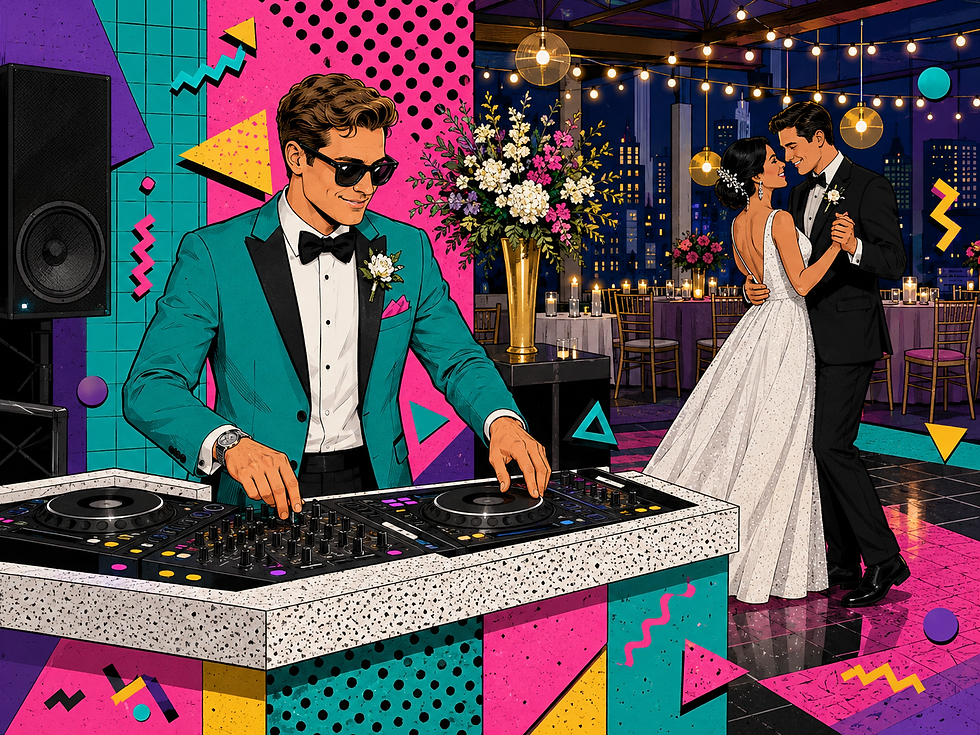
Another confusing piece is the difference between the person playing the music and the place where the music is being performed. In many public performance situations, the responsibility often falls on the venue or organization authorizing the event, not necessarily on the individual entertainer pressing play.
Think about a wedding DJ. The DJ may bring the speakers, laptop, microphone, lights, cables, and enough extension cords to knit a copper sweater, but the licensing question may still belong to the venue or event host. That is why restaurants, bars, skating rinks, event centers, and performance spaces need to pay attention. They cannot always assume, “The band handled it,” or “The DJ handled it.”
The same logic can apply to jukeboxes and karaoke. A customer may choose the song, a machine may provide the music, or a karaoke host may run the night, but the venue still needs to know what is actually covered. The person choosing the song is not always the person responsible for the rights.
The performer is not always the legal umbrella. The room may be. The same DJ could play the same playlist at a licensed venue one weekend and an unlicensed event space the next, and the music itself may not change at all. What changes is the rights situation around the use.
This Is Not Just Theory

There was a restaurant in Springfield, Missouri that reportedly found this out the hard way. In 2016, a BMI employee visited Galloway Station, listened, and documented specific songs being performed. BMI did not have to guess what music was played. Someone was reportedly in the room, taking notes while the business likely thought the music was just background atmosphere.
That is the part small business owners need to understand. This is not always some mysterious computer system floating in the clouds. Sometimes it is a real person in a real room, writing down real songs while a business owner thinks the music is just part of the vibe.
As a former radio station manager, I saw another side of this issue. People would call and request songs all the time. Sometimes we could play them, and sometimes we could not. That was not because we hated fun or because radio people enjoy saying no, although enough morning-show coffee can turn anyone into a gatekeeper with headphones. The issue was licensing.
A song may sound simple to the listener, but behind that song can be a small committee of rights. One songwriter may be represented by BMI, another may be with ASCAP, a publisher may be involved, the recording may have a separate owner, and the singer everyone recognizes may not be the person who wrote the song. That is why “we have a BMI license” is not always the end of the conversation. A BMI license covers BMI’s repertoire, an ASCAP license covers ASCAP’s repertoire, and SESAC or Global Music Rights may be separate pieces of the puzzle.
The business is not licensing the artist’s name, the vibe, or “songs from the 80s.” It is dealing with the actual songs and the rights trail attached to them.
Why Songwriters Have These Rights

The short version is that songs are work. Somebody wrote the melody, somebody wrote the lyrics, somebody performed the recording, somebody produced it, somebody published it, and somebody owns or controls certain rights. Licensing exists because music has value beyond private listening.
When a business uses music to create atmosphere, entertain customers, sell food, build a brand, hold attention, or make an event feel more exciting, that music is helping the business or organization. The people who created it are supposed to be compensated when their work is used in that way.
That does not mean the system is simple. It is not. It is a drawer full of tangled earbuds. But the reason behind it is not crazy. Creators should be paid when their work helps someone else make money.
One Song Can Have More Than One Rights Trail

Music licensing gets more complicated when a single song has multiple writers, publishers, or rights holders. Those writers may be connected to different performing rights organizations, and rights can also change hands when catalogs are sold, estates take control, or publishing arrangements shift.
That is why one artist does not always equal one license. Even if a business owner loves one performer, the songs associated with that performer may not all live under one simple licensing roof. A performer may be famous for a song they did not write, and a songwriter may have co-written a hit with people represented by different organizations.
This is also one reason restaurant playlists, business music services, “best of” compilations, and radio formats can feel repetitive. Sometimes familiar songs are familiar because they are hits. Sometimes they are familiar because they are easier to package, license, program, and manage. The music may sound casual, but the rights path behind it may not be.
The Radio Station Problem
The hot dog stand has one version of the problem. A radio station has another. A station uses music as part of the product itself, but even then licensing is not one magic permission slip. A recorded song can involve more than one copyright. There is the underlying musical work, meaning the melody and lyrics, and there is the sound recording, meaning the actual recorded performance. Those can be owned and licensed separately, which is why traditional radio, internet radio, podcasts, livestreams, and social media videos can all touch music in different ways.
To the listener, playing a song on the air and streaming a song online may feel almost identical. On the licensing side, those can be very different machines. One is a pickup truck, and the other is a pickup truck with a jet engine bolted to the bed.
The Marketing Video Trap

Small businesses especially need to be careful when music becomes part of a video. Playing music inside a business is one category. Using music in a commercial, Facebook video, YouTube upload, podcast intro, Instagram reel, livestream opening, testimonial video, event recap, or website background video is another.
A business may have permission to play music in its building, but that does not automatically mean it can use the same song in an ad. This is where people get tricked by the “it was available in the app” problem. A song might appear inside a social media editing tool, but that does not always mean it is cleared for every commercial use, boosted post, paid ad, website embed, podcast, or long-term campaign.
The platform may let you click the button. That does not mean the button loves you. For business content, music should be chosen with intention. Use licensed production music, platform-safe commercial tracks, custom music, cleared audio, or silence when silence serves the message better. The wrong song can make a good video unusable, and an unusable video is not marketing. It is an expensive file taking a nap on your hard drive.
Build Your Own Sound

For years, even “Happy Birthday” was part of the licensing conversation. That is why so many chain restaurants created their own birthday songs, chants, claps, and table-side cheerleader routines. Applebee’s, Chili’s, and other restaurants did not just do that because managers loved making servers perform tiny dinner theater. They were protecting the business.
The traditional “Happy Birthday” song was long treated as copyrighted for commercial use. That changed after a legal fight, and the song is now generally recognized as public domain in the United States. But the old restaurant workaround remains a great business lesson: if the famous song creates risk, write your own.
That same lesson shows up in family entertainment businesses too. Places like Chuck E. Cheese have used character-driven songs, house entertainment, parody-style numbers, and original music as part of the brand experience. That does not mean parody is always safe, because parody is not a magic legal force field. But an original house song, birthday chant, parade theme, podcast intro, or event soundtrack can give a business something better than borrowed music. It gives the business ownership.
How to Use Music Without Borrowing Trouble
The answer is not to remove music from every business, event, or video. That would be bad advice. Music is powerful because it changes the room, gives a video rhythm, makes a store feel alive, and helps an event feel less like a folding chair convention. The better question is what kind of music can be used safely.
One option is to feature local artists who create original music and give written permission. This can support local talent while giving a business a sound nobody else has, but the agreement needs to be clear. The artist should actually own the song, the song should not be tied up with a publisher or co-writer without permission, and the business should know whether the artist is affiliated with a performing rights organization.
Another option is to use a commercial background music service. This is the modern version of what many people still call Muzak. These services are built for stores, restaurants, offices, gyms, and public spaces, and they are very different from plugging in a personal streaming account and hoping nobody notices.
A business can also use royalty-free or production music, but “royalty-free” does not mean “free.” It usually means the music is used under a specific license, either through a one-time purchase, subscription, or usage agreement. That license may cover YouTube videos, commercials, podcasts, websites, or social posts depending on the terms, so the terms matter.

AI-produced music may also be useful for simple background tracks, podcast beds, or custom brand sounds, but it still needs caution. A business should check the platform’s usage terms and avoid asking AI to imitate a famous artist, recreate a known song, or sound “just like” a copyrighted track. That is not strategy. It's a trap wearing sunglasses.
Public domain music can be another useful option, especially with older hymns and older compositions, but public domain does not mean “anything old on the internet.” The underlying song may be public domain while the recording is still protected. “Amazing Grace” as a hymn may be public domain, but a modern piano recording, choir arrangement, or orchestral version may not be. The melody may be free while the specific version you found online is not.
The safest approach is to ask better questions before using the track. Who wrote it? Is the composition public domain? Who recorded this version? Is the arrangement protected? Does the license cover the intended use? Is the permission in writing? Those questions may feel boring, but boring questions are cheaper than exciting lawsuits.
The Woodruff Media Rule
If you want music without the mainstream licensing mess, do not steal a famous feeling. Build your own. Use a local artist, commission a simple jingle, license production music, use public-domain material carefully, subscribe to a business music service, or create a custom sound bed that actually belongs to the brand.
The safest music is not always the most famous music. Sometimes the safest music is the one your business actually has permission to use.
Woodruff Media can help small businesses think through the ins and outs of music licensing, content use, and safer soundtrack options. We are not a law firm, and this article is not legal advice, but we can help you ask better questions before the music becomes part of your brand, your video, your event, your livestream, or your customer experience.
Sometimes the answer is a licensed music service. Sometimes it is royalty-free production music. Sometimes it is a local artist agreement. Sometimes it is a custom jingle. Sometimes it is public-domain music used carefully. Sometimes it is no music at all.
The point is not to make marketing boring. The point is to make it usable.
You run the business. We help people notice it. LEARN MORE.
Final Note
This article is for general marketing education and is not legal advice. Music licensing can vary based on how, where, and why music is used. For specific licensing questions, contact the appropriate licensing organization or an attorney.
Written with AI assistance based on the author’s ideas, experience, and editorial direction.


Comments