

Blueprints of Play: How My Childhood Toys Shaped a Career

One of the cool things about being in marketing and media production is that I can still be a kid.
Unlike other adults who may not have doodled in a notebook since high school, my career choice requires me to keep looking at the world through childlike eyes. I am constantly drawing, creating weird stories, humming stupid songs, building things, testing ideas, and figuring out how to make something work.
The funny thing is, when I was a kid, I did not realize playtime would have such an influence on my adulthood.
Looking back, those toys were not just ways to pass the time. They were little blueprints. Finger paint taught me color. Notebooks taught me layout and story. G.I. Joe taught me characters, world-building, and eventually radio communication. Tinkertoys and Legos taught me how to build something when the instructions were missing. The electronics kit, the ZX81, and the cassette recorder taught me that media is not magic. It is wires, signals, sound, timing, patience, and a little bit of stubbornness.
Here is a list of toys that helped get me started on an interesting life path.
Finger Paint
What a mess I would make as a preschooler.

This was one of the first toys I remember begging my mom for. I saw it at the Pamida in Crete, Nebraska, and it hit me that finger paint was not just something you got to use at school. You could have it at home. That was dangerous information for a kid like me.
Finger paint was color you could touch. You could smear it, drag it, mix it, ruin it, and start over. It had a smell. It had a texture. And yes, at some point, I am pretty sure I tasted it. I do not recommend that as a design strategy, but preschoolers are not known for disciplined market research.
I did not know anything about color theory. I did not know about branding, contrast, RGB values, or visual hierarchy. I just knew yellow felt loud. Blue felt calm. Red wanted attention. Green felt alive. I was learning, in the messiest possible way, that color changes how something feels.
That lesson never really left.
Today, I use color in logos, thumbnails, graphics, websites, videos, and marketing campaigns. I do not use all five senses anymore, which is probably best for everyone involved, but I still get a little thrill when the right color lands in the right place.
My favorite? Yellow. RGB: 255, 255, 0.
Some kids grow out of finger painting. I just upgraded the tools.
Son of Big Chief Notebook

Combined with a #1 pencil, and later a #2 pencil, the Son of Big Chief notebook became one of my first creative workspaces.
I drew airplanes, robots, missiles, stick men, buildings, trees, rivers, forts, roads, and strange machines that probably made sense only to me. The worlds I created took me away from the classroom and into whatever story was happening in my head that day.
Sadly, my teacher did not always appreciate this level of independent world-building. More than once, I was transported back to reality and placed in a corner.
At the time, I thought I was just doodling.
Looking back, I was learning how to think visually. A blank page became a place to arrange ideas. A river had to go somewhere. A building needed a shape. A robot needed a purpose. An airplane needed a sky. Even my stick men were part of a scene, not just random marks on paper. That is not far from what I do now.
Before a video becomes a video, it starts as an idea. Before a thumbnail becomes a thumbnail, somebody has to decide what belongs in the frame. Before a marketing campaign works, the pieces need to be arranged so people can understand what they are seeing.
Those notebooks were probably my first storyboards. I did not know the word yet. I just knew a pencil and paper could open a door. And sometimes, apparently, that door led straight to the corner of the classroom.
G.I. Joe Action Figures

Very few children can remember the exact day a favorite toy changed their life.
I can. July 28, 1982. That was the day I got my first G.I. Joe action figure at Walmart in Monett, Missouri. His name was Breaker. He was the communications guy. At the time, I just knew he looked cool and came with gear. I did not know that years later I would enlist in the Army and become a radio operator.
On the way home, my mother turned on the 6 o’clock news and learned that Christian recording artist Keith Green and two of his children had died in a plane crash. For the rest of the evening, Mom listened to the radio as stations played Keith Green’s music and talked about his life.
So there I was, sitting with my new G.I. Joe, while the house filled with music, news, grief, and radio voices. I was too young to understand everything happening around me. But looking back, that night brought together several things that would follow me for the rest of my life: military imagery, storytelling, broadcasting, music, tragedy, and the power of a voice coming through a speaker.
Breaker was just a toy but he also introduced me to the idea that communication mattered. Somebody had to carry the message. Somebody had to keep the signal moving. Somebody had to connect people who were not standing in the same room.
Years later, when I joined the Army, I chose to be a radio operator. I cannot say a plastic action figure made that decision for me. But I also cannot pretend Breaker was not somewhere in the background, holding the radio.
Tinkertoys
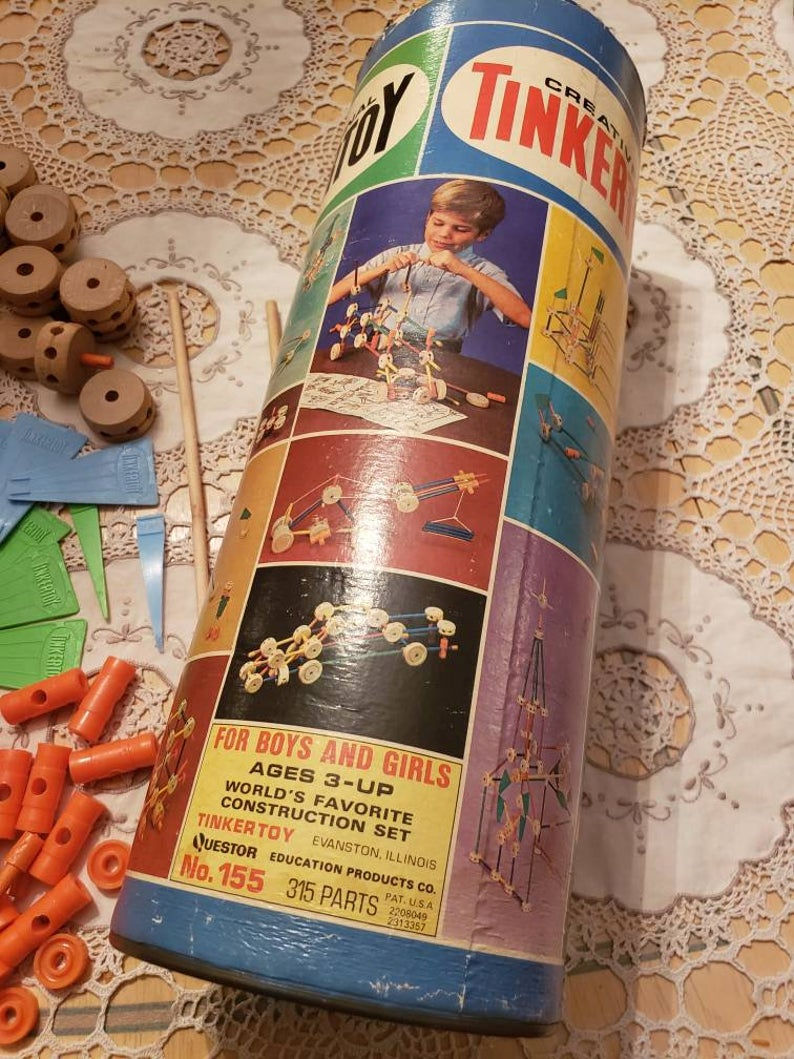
Truthfully, I got this toy before my first G.I. Joe action figure, but I do not remember playing with it much until later. Once Breaker entered the picture, though, Tinkertoys suddenly had a job. He needed a fort, a satellite tower, and probably some kind of command center because my bedroom floor had become a full military installation.
Unlike Lincoln Logs, Tinkertoys did not hand me the shape of a building. They gave me sticks, wheels, connectors, and a problem to solve. A tower only worked if I could figure out how to make it stand. A fort only worked if I could imagine walls where there were none. Golden Books became floors and roofs. A chair became a mountain. The carpet became enemy territory. I was learning to build with what was available instead of waiting for the perfect pieces.
That lesson followed me into adulthood. A small business rarely has unlimited money, unlimited time, perfect lighting, perfect footage, perfect staff, or perfect conditions. Most of the time, the job is to look at what is already there and figure out what it can become. That is still how I work. Whether I am solving a video problem, shaping a campaign, fixing a content gap, or helping a business get more use out of what it already has, I am still doing what those Tinkertoys taught me: build the structure, support the story, and make the pieces work.
Radio Shack Electronic Set

My granddad bought me this toy “just because.” That may not sound like much, but it mattered. A good “just because” gift can open a door a kid did not know was there.
The Radio Shack electronic set taught me how to slow down and follow directions. It had little wires, springs, diagrams, switches, resistors, diodes, and enough tiny parts to make a kid feel like he was building something serious. If the wire went in the wrong place, nothing happened. If one connection was loose, the whole project failed. The set did not care how excited I was. It only worked when the circuit was right.
That was frustrating, but it was useful.
It taught me that when something does not work, you do not always throw it away. You trace the signal. You check the connection. You look for the weak point. You learn the difference between a bad idea and a bad connection. I still use that kind of thinking.
When a video does not land, a website does not guide people clearly, or a social media post gets ignored, I try not to blame the whole machine right away. I look at the pieces. Was the message clear? Was the image strong? Was the audience right? Was the call-to-action easy to understand? Did the viewer know what to do next?
That little electronics kit taught me that communication has circuits too.
If the signal is broken, find the break. Then fix the wire.
Sinclair ZX81 Computer

A few months later, my granddad lent me his old computer, a Sinclair ZX81.
It was not high-tech, even then. It was not the kind of glowing, futuristic machine I imagined Breaker using in a command center. It was small, limited, and slow. But for me, it was a doorway.
Granddad also gave me a game book that included BASIC code. If I wanted to play the game, I had to type it in myself. That meant line after line, number after number, command after command. In all honesty, I mostly stuck with the games that required about thirty lines of code. That was enough to test my patience without making me question my entire future.
Still, those short programs taught me something important. A computer does exactly what you tell it to do, not what you meant to tell it to do. One missing character, one wrong command, or one typo could break the whole thing. The machine had no sympathy. It did not grade on effort. It only responded to instructions.
Later, Granddad told me the programs could be saved to a cassette recorder and loaded again later. That seemed almost magical to me. Sound could hold information. A cassette tape could become storage. A machine could remember something if you knew how to tell it what to keep.
That early experience helped me understand other forms of digital work later, including HTML, JavaScript, websites, and even simple Windows commands. I did not become a full-time programmer, but I learned enough to understand that technology is not magic. It is structure, syntax, logic, and troubleshooting.
The ZX81 taught me that if something breaks, the answer is usually somewhere in the code.
Or, more painfully, somewhere in the typo.
Sony Cassette Recorder

The Sony cassette recorder I got for Christmas became my first production studio.
It did not have a mixing board, a soundproof room, automation, editing software, or an audience that had asked for a show. But it had a record button, and that was enough.
In fourth grade, I started making goofy radio programs on cassette. I would talk, play music, create little segments, and pretend I was on the air. I did not know anything about pacing, format clocks, voice tracking, or production value. I just knew a voice could be recorded, arranged, played back, and heard again.
That changed something.
By eighth grade, I had figured out how to connect the tape recorder to my electronic kit and broadcast music to a nearby radio. Suddenly, the cassette recorder was not just recording sound. It was sending it. I created a prerecorded program with several songs, including Keith Green, and played it through the little setup I had built.
My sister was not impressed when I hijacked the music she was listening to on her radio.
But looking back, that was the moment a disc jockey and broadcaster started to form.
That cassette recorder taught me that media does not begin with permission. It begins when somebody decides to make something. A voice, a song, a story, a signal, and a listener are enough to start. Everything else is just better equipment. I still think that way.
Whether I am making a commercial, editing a video, writing a blog, producing a livestream, or helping a small business explain itself, I am still doing some version of what I did with that cassette recorder. Press record. Build the program. Send the signal.
Technic Legos
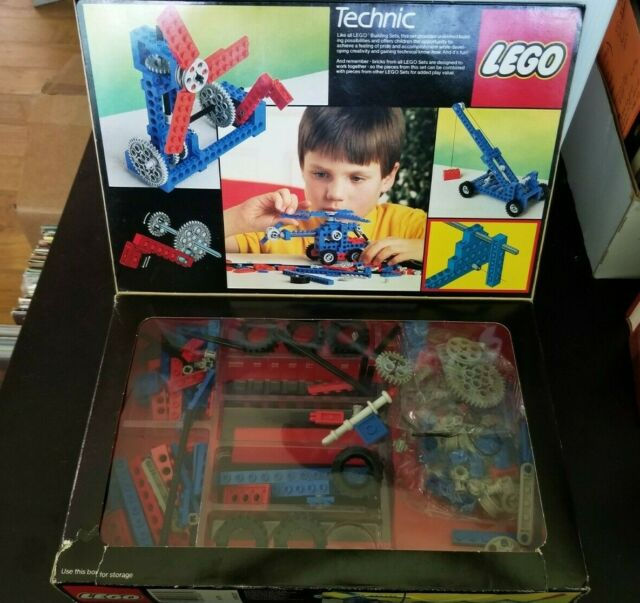
Every kid in the 1980s had Legos, but not every kid had the Technic series.
Technic Legos felt different. Regular Legos could build a house, a spaceship, or a weird little square car if you had enough imagination. But Technic Legos asked more from you. They had gears, axles, beams, pins, and moving parts. The model was not finished just because it looked right. It had to work. That changed the way I built.
I remember looking at the kid on the box and understanding that this was not casual play. This was focus. Every piece had a purpose. Every gear had to connect to something. If one part was in the wrong place, the machine might still look fine, but it would not move the way it was supposed to. That is still how I think about projects.
A video can look nice and still fail. A logo can be attractive and still say nothing. A website can be clean and still confuse people. A marketing campaign can be clever and still not connect to the business goal.
Technic Legos taught me that design is not only about appearance. It is about function. The pieces have to work together.
Every project has limits. A client has a budget. A room has bad lighting. A location has no power outlets. A business has old photos, uneven branding, or no clear message. The job is to study the parts, understand the goal, and build the strongest machine possible with what is available. I still love that kind of challenge. Give me the pieces, show me the problem, and let me figure out how the gears are supposed to turn.
Model Rockets

Before drone photography became the standard for aerial shots, getting a camera into the sky usually required a helicopter, an airplane, or, if you were on a very tight budget, a model rocket and questionable judgment. I did not have a rocket camera, but I did start building model rockets in eighth grade.
Like most things I enjoyed, I took it further than the kit intended. I bought a cheap rocket from a variety store in Monett, Missouri, studied how it was made, and started reverse engineering it. Once I understood the basic structure, I realized I could make rockets out of paper towel rolls, toilet paper rolls, cardboard, tape, and whatever else looked useful.
That was when the experiments began. I attached lights. I changed fins. I modified wings. I tested shapes that probably should have remained theoretical. One rocket flipped, turned, and chased me close enough to make me reconsider my engineering credentials.
But that was part of the lesson. Model rockets taught me that ideas have to be tested in the real world. A design can look good on the table and fail spectacularly in the air. A small change can alter the whole flight. Weight, balance, drag, direction, and timing all matter. You do not really know what you built until you launch it.
That lesson still applies to creative work. A marketing idea can sound great in a meeting. A video concept can look perfect in a script. A graphic can seem strong on the screen. But once people see it, click it, ignore it, share it, misunderstand it, or respond to it, the truth shows up.
The launch tells you what the plan could not. You build, test, watch what happens, and adjust before the next one tries to take your head off.
The Toys Were the Blueprint

Looking back, those toys did not give me a straight career path. They gave me a way of thinking. Finger paint taught me that color changes how something feels. Notebooks taught me that a blank page can become a world. G.I. Joe introduced me to story, service, and communication. Tinkertoys taught me to build with what was available. The electronics kit taught me to trace the signal. The ZX81 taught me that details matter. The cassette recorder taught me to press record and make the show. Technic Legos taught me that the machine has to work. Model rockets taught me to build, launch, watch, and adjust. That is still how I approach creative work.
Marketing is not just posting something pretty and hoping people care. It is color, structure, message, timing, story, testing, troubleshooting, and knowing what to do when the first version does not fly straight.
I still play with color, sound, pictures, words, wires, stories, and strange little ideas.
I just do it for businesses now. If your business needs marketing built with strategy, creativity, and a little childlike curiosity, contact me.


Comments